Banff & Lake Louise: A First-Timer's Guide to the Canadian Rockies
Inspired already? Get a personalized day-by-day itinerary for Banff, Alberta, Canada in minutes — free.
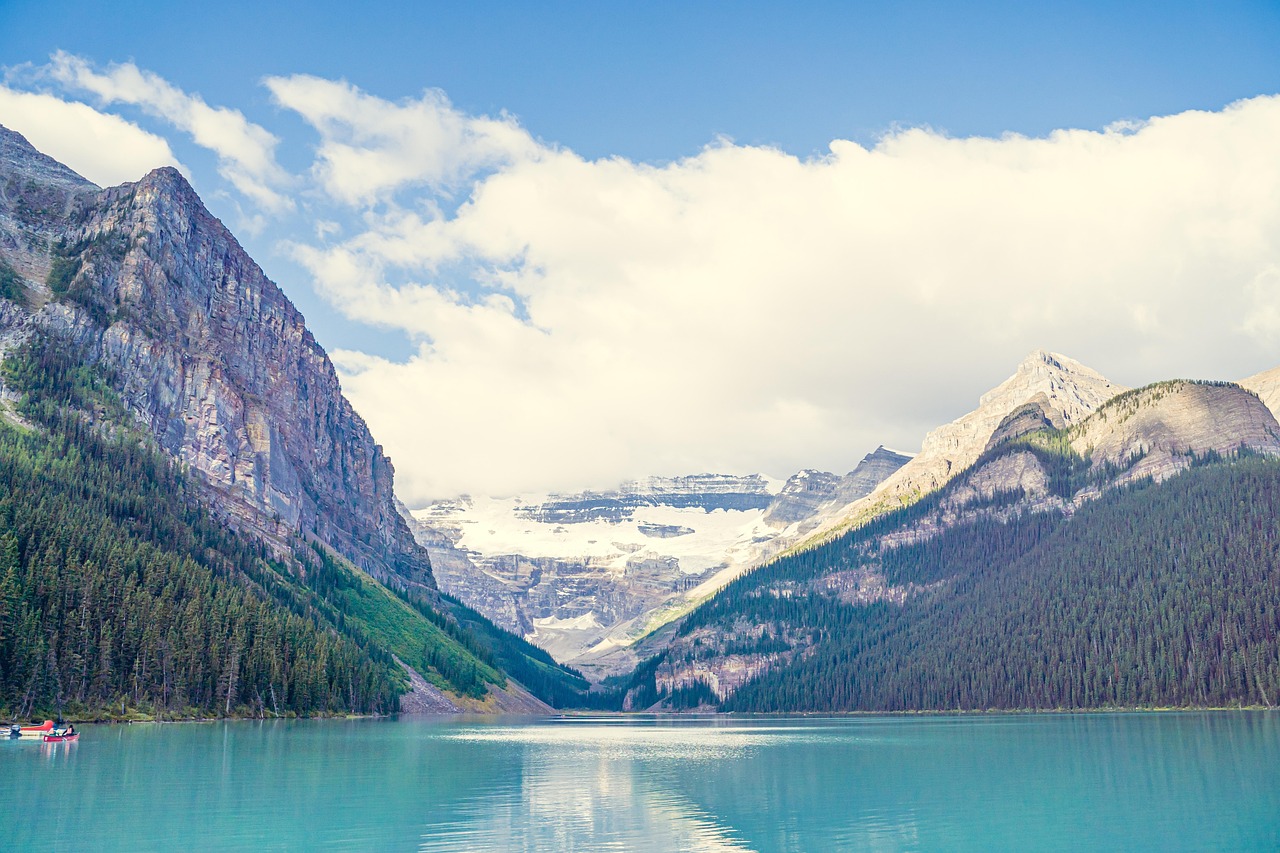
Plan this tripFew places on Earth deliver on the postcard promise quite like Banff National Park. The lakes really are that turquoise — a trick of glacial rock flour suspended in meltwater — and the peaks really do rise straight out of the valley floor like a painted backdrop. Canada's first national park, established in 1885, spans 6,641 square kilometers of the Alberta Rockies, and even a long weekend here can feel like stepping into another world.
When to go
The classic window is mid-June through mid-September, when the high-alpine trails are snow-free and Moraine Lake and Lake Louise are fully thawed into their famous blue. July and August bring the best weather and the biggest crowds; June and September trade a little warmth for a lot more breathing room. If you're chasing larch trees turning gold, aim for the last two weeks of September. Winter is a different trip entirely — world-class skiing at Lake Louise and Sunshine Village, frozen canyon walks, and ice skating on the lake beneath the Fairmont Chateau.
The lakes you came for
Lake Louise and Moraine Lake are the headliners, and they've become so popular that Parks Canada has restricted private vehicles at Moraine Lake entirely. Book the Parks Canada shuttle or a Roam Transit bus well in advance, or splurge on a sunrise tour — watching first light hit the Ten Peaks above Moraine's impossibly blue water is worth the early alarm. Louise rewards those who keep walking: the Lake Agnes Tea House trail (7 km round trip) climbs past Mirror Lake to a century-old tea house serving fresh scones at 2,135 meters.
Beyond the postcards
- Johnston Canyon: catwalks bolted to the canyon wall lead to two sets of waterfalls; go before 8 a.m. or after 5 p.m. to dodge tour buses.
- Peyto Lake: a ten-minute walk to the most wolf-head-shaped, impossibly blue lake viewpoint on the Icefields Parkway.
- Sulphur Mountain: ride the Banff Gondola or earn the summit ridge on foot; the boardwalk views over the Bow Valley are spectacular either way.
- Vermilion Lakes at sunset: five minutes from Banff townsite, and the classic reflection shot of Mount Rundle.
Where to stay
Banff townsite is the liveliest base, with restaurants, gear shops, and the Banff Upper Hot Springs a short drive away. Lake Louise village is quieter and closer to the big-ticket lakes. Canmore, just outside the park gates, offers better value and a more local feel — the trade-off is a 20-minute drive to the park each morning. Book summer accommodation three to six months ahead; this is not a destination that rewards spontaneity in August.
Practical tips
- Buy your Parks Canada pass online before arrival to skip the gate lineup.
- Wildlife is genuinely wild: keep 30 meters from elk and 100 meters from bears, and carry bear spray on trails.
- Weather turns fast at altitude — pack layers even in July.
- Cell coverage is patchy outside the townsites; download offline maps.
The magic of Banff is that the icons are just the beginning. Give yourself at least four days, sprinkle in a sunrise or two, and leave room in the plan for the pullover-the-car moments — there will be many.
Ready to plan this trip?
Let VacayPlot's AI craft a personalized day-by-day itinerary for Banff, Alberta, Canada — free.
Plan this trip