Bangkok: Street Food, Sacred Temples, and the Art of the Long Layover
Inspired already? Get a personalized day-by-day itinerary for Bangkok, Thailand in minutes — free.
Plan this tripBangkok doesn't ease you in. The city hits all senses at once: incense and lemongrass, tuk-tuk engines and temple bells, gold leaf and neon. It's also one of the most rewarding cities in Asia once you learn its rhythm — temples and markets in the cool morning, air-conditioned refuge or a long lunch through the midday blaze, then rooftop sunsets and street-food crawls after dark.
The royal island: Grand Palace and the riverside temples
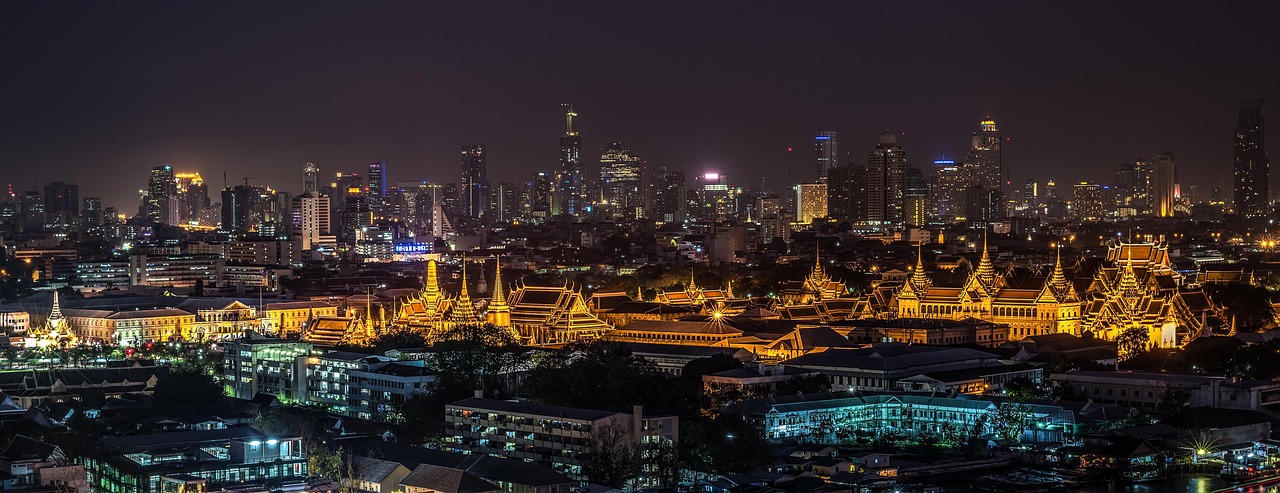
Start early on Rattanakosin Island, the historic royal district looped by the Chao Phraya River. The Grand Palace complex and its Temple of the Emerald Buddha are Thailand's most sacred ground — arrive at the 8:30 opening, dress properly (covered shoulders and knees; they're strict), and give it two hours. Walk ten minutes south to Wat Pho, home of the 46-meter gold Reclining Buddha and the birthplace of Thai massage — the on-site school gives the city's most authoritative kneading. Then take the two-baht cross-river ferry to Wat Arun, whose porcelain-encrusted spire is best photographed from the opposite bank at sunset.
Eat like the city depends on it
- Chinatown (Yaowarat) after dark: the greatest street-food gauntlet in Asia — oyster omelets, bird's nest, charcoal-wok noodles under neon signs.
- Boat noodles at Victory Monument: intense, tiny bowls meant to be ordered five at a time.
- A proper som tam (green papaya salad) and grilled chicken lunch in an Isaan-style shophouse.
- One splurge meal: Bangkok's fine-dining scene reinvents royal Thai cuisine and books out weeks ahead.
Canals, markets, and modern Bangkok
Hire a longtail boat into the Thonburi canals and Bangkok's Venice-of-the-East past reappears: stilt houses, orchid gardens, monitor lizards sunning on the banks. Back on land, Chatuchak Weekend Market's 15,000 stalls sell everything from vintage denim to fighting-fish; go early, get lost on purpose. For contrast, the malls around Siam are destinations in themselves — the food court at Icon Siam recreates a floating market indoors, and the rooftop bars above Sukhumvit turn rush hour into a spectator sport.
Day trips that earn their place
Ayutthaya, the ruined former capital 80 minutes north by train, scatters crumbling prangs and Buddha heads wrapped in banyan roots across an island city — rent a bicycle and circle it slowly. The Maeklong Railway Market, where vendors fold their awnings back eight times a day as the train rolls literally through the stalls, pairs neatly with the Damnoen Saduak floating market in a single morning, though Amphawa's evening floating market is the more local scene.
Getting around and staying sane
- The BTS Skytrain and MRT beat traffic every time; the Chao Phraya Express boats are transit and sightseeing in one.
- Agree on tuk-tuk fares before boarding, and use ride-hailing apps for honest metered pricing.
- November through February is the cool, dry sweet spot; April is the hottest month and brings the Songkran water festival.
- Temples require covered shoulders and knees everywhere — carry a light scarf.
Three full days covers the icons and the food; five lets you add the day trips and a canal-side afternoon doing gloriously little. Either way, you'll board your departure flight already scheming about the return — most likely with a market-stall shopping list.
Ready to plan this trip?
Let VacayPlot's AI craft a personalized day-by-day itinerary for Bangkok, Thailand — free.
Plan this trip